
I’ve been back at MD Anderson recently for tests and appointments with doctors. It’s strange to be back there. It feels like chemo was a long time ago and, in many ways, I’ve already put it behind me. I’d been feeling really good and had even started running again (before the flood – more about that later). But I’m not finished with this journey. I’ll be having an oophorectomy and a hysterectomy on December 1 to address my very elevated risk for ovarian (and possibly uterine) cancer due to the BRCA1 gene. Thereafter, for five years, I’ll take the drug Arimidex, an aromatase inhibitor (AI) that decreases estrogen levels in the body, to reduce the risk of a recurrence. (Since my tumor was estrogen receptor positive (ER+), estrogen feeds its growth; thus, lowering estrogen levels in my body lowers the ability of any (potentially) remaining cancer cells to grow and spread.)
When I was diagnosed with triple negative breast cancer 20 years ago, I was told it was a very aggressive type; so even though it was early Stage 1, chemotherapy was recommended to ensure killing cells in any area where it may have spread, however unlikely that was. And it worked. I did not have a recurrence of that cancer; I developed an entirely new kind. So why wouldn’t a bilateral mastectomy with strong chemotherapy not be enough to tackle this “less aggressive” Stage 1 cancer? Is a five-year regimen of an aromatase inhibitor (with all of its accompanying side effects) really necessary?
According to my oncologist, my current type of cancer acts very differently from the previous one, from a biological standpoint. The triple negative cancer was very responsive to chemotherapy, so while it would have grown rapidly if untreated, chemotherapy easily rid my body of it. The ER+ cancer I had this time, however, is less consistent in its response to treatment. Chemotherapy may (potentially) have helped, killing off some (potentially) remaining cells, but maybe not all of them. In the event there are (potentially) some cells remaining, the AI will (potentially) prevent their ability to grow.
Potentially. That’s the key word with all of this. As I’ve been reminded, it’s called “practicing medicine” for a reason – there are rarely certainties. So how do I deal with these recommendations for treatment that may or may not help, that may or may not even be necessary? Well, it ends up being a pretty simple answer. I think about the odds of surviving a recurrence – most women don’t live more than 2 years after a recurrence – and I realize that I need to do everything possible to ensure that I’m around for a lot longer. It’s hard not having any control over any of this. It seems like I have choices – do the surgery or not, take the medication or not – but is it really a choice if the result of declining is a possible death sentence?
When my doctor recommended chemotherapy, I balked a bit. I had hoped to avoid that unpleasant experience this time around. But when others heard it was “only” twelve weeks, they seemed to think this would be over and done with in a matter of months. I knew otherwise. After chemo would be reconstruction, after reconstruction would be a hysterectomy, and after the hysterectomy would be the medication … for five years. A medication that causes a loss of bone density, joint and bone pain, possible heart issues, fatigue, hair loss. When I questioned my doctor about the side effects, she said, “You’ll probably feel like you’re 80 years old when you wake up in the morning, but it’ll get better during the day.” Oh, okay. Because it’s no big deal to feel like you’re 80 years old when you’re only 48.
Yeah, this isn’t over. It won’t be over after the surgery in a few weeks. It won’t be over after the five years of medication. I’ll never know if any of this was necessary and, God forbid, if the cancer comes back, if any of this did any good. But it could. Potentially.
 Tomorrow I go under the knife again for my reconstruction surgery. For the past six months, I’ve had tissue expanders under my skin preparing a space for silicone implants. It’s hard to describe what the expanders feel like, mostly as if large round rocks have been embedded under my skin, heavy, fixed and rigid. I’m constantly aware of them and their firm inflexibility. I hug people from the side because I can’t imagine what it must feel like to them to have these boulders (pun intended) pressed against them. I’m really ready to get them out!
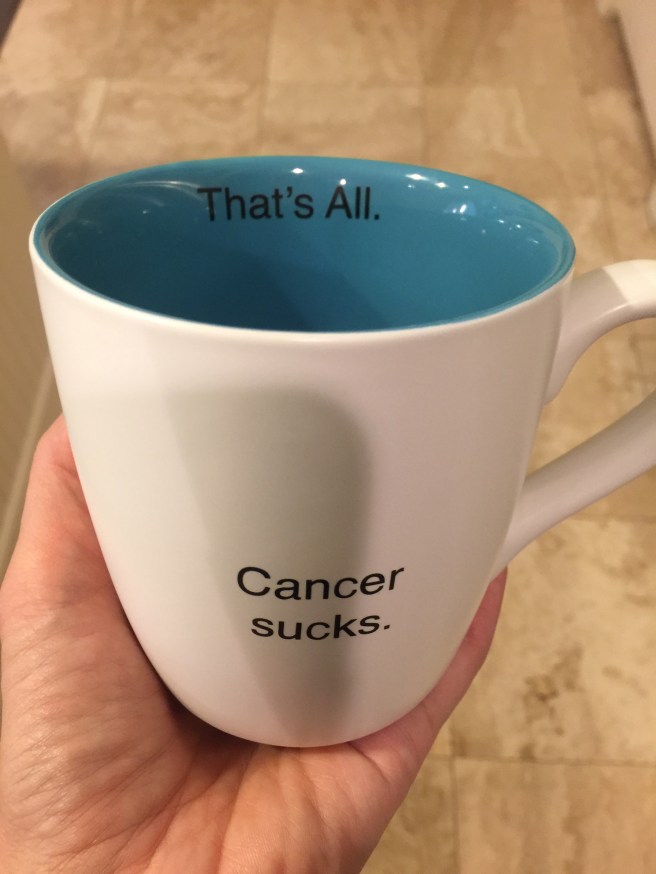
 I searched through all sorts of inspirational quotes about strength, overcoming challenges and growth in difficult times to include in this post. But what really sums it up for me now is simply this:
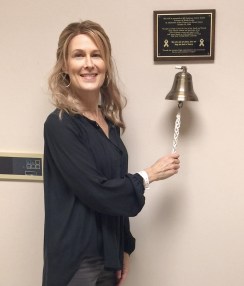 Amen, Sister! I fought, I persevered and ultimately I achieved victory. I have been told I inspired as well. I am touched and honored to hear so. But I did it all with the help and support of an amazing number of kind and generous people whom I will be thanking for a long time to come.
 I got some good news this weekend. My next round of chemo would be my last!
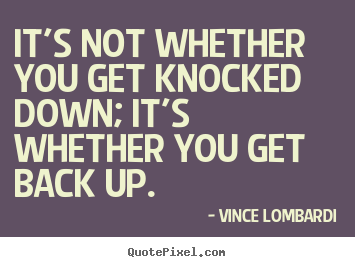 At the end of my recovery from the week I spent in bed, I began to develop some new side effects. My tongue became very sensitive, my throat was sore and my lips began to swell. None of these were sudden, like an allergic reaction, but built gradually over the weekend. While I found it odd that lips looking like Angelina Jolie’s were a side effect of chemo (who knew), I was generally feeling well and received my 8th round of chemo (Taxol only) last Monday. Just before my chemo infusion, I noticed a rash developing on my chest. It was also on my torso, but it didn’t itch, so I just chalked it up to another “little indignity” of treatment. The infusion went fine and I was home around 9:00 p.m.
 I forgot to include an update last time about my current schedule for chemotherapy. My last round of chemo, the one that took me down, was the Wednesday before last. Not surprisingly, when I returned for the next round the following Wednesday, feeling (and looking!) awful, I was rejected due to low neutrophil counts again. To give my body a bit of a break, I was rescheduled for today at 5:00 p.m.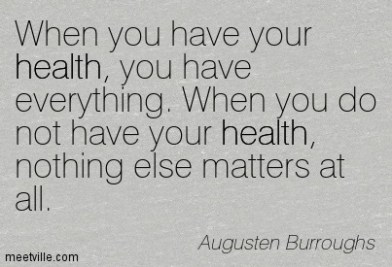
 Hip E Chic